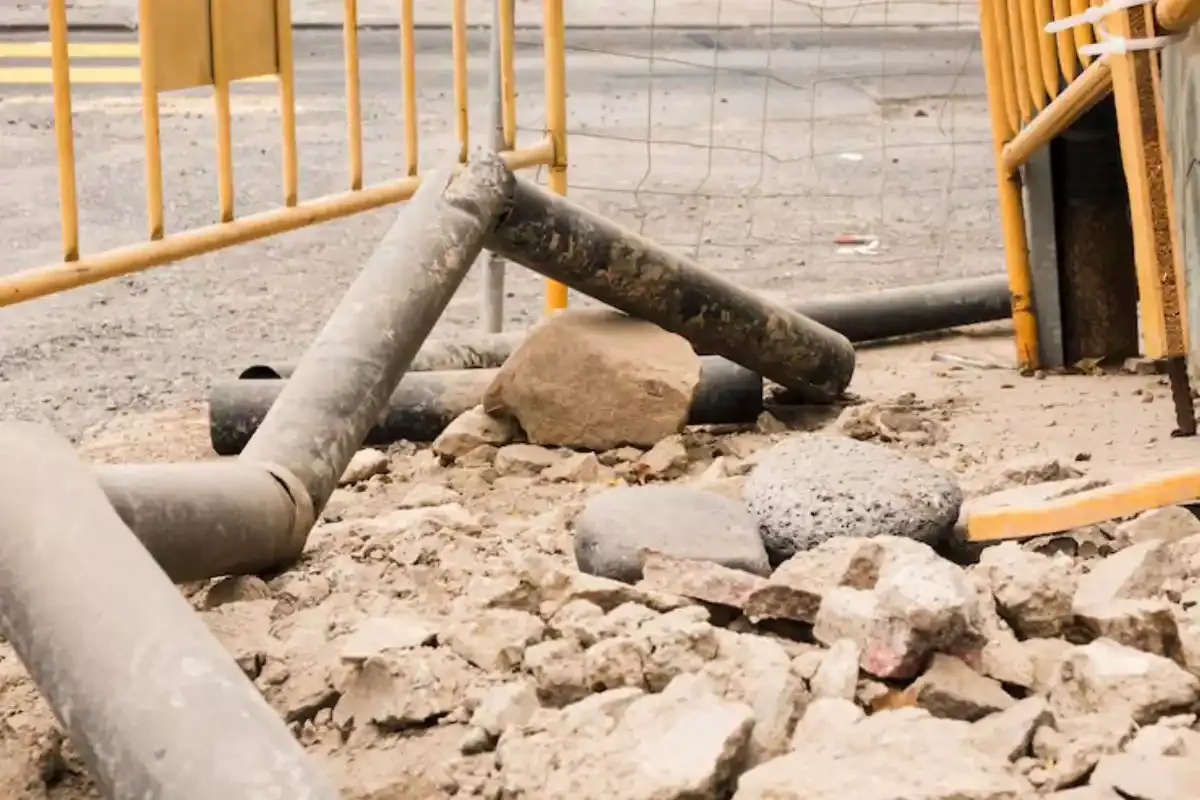
Signs your sewer line may be broken
Repeat backups
Clearing the line works for a few weeks, then the backup returns.
Gurgling and odors
Air displaced by a restricted line bubbles through traps and carries a sewer smell.
Wet or sunken ground
A soggy patch or a dip in the yard along the line's path.
Cracks and rodents
New cracks in a slab or evidence of pests entering through a broken pipe.
None of these proves a break by itself. A camera inspection shows the pipe's actual condition. Our sewer inspection page explains what the video reveals.
Why laterals fail
The usual causes are roots entering open joints, soil settling under the pipe, age and corrosion, and damage from construction. Central San states that root intrusion is the leading cause of sewer backups, and advises professional inspection or cleaning at least every other year if trees stand near the lateral.
Homes from the postwar decades often have clay or cast iron laterals. Those materials last many years, but their joints are the weak point, and roots find joints.
Who is responsible for the repair
Central San states that property owners are responsible for their private laterals, from the house to where it connects to Central San's sewer line, including the part under the sidewalk and street. If the blockage is in the public main, that is the district's responsibility, and a camera helps show where the problem sits.
| Part of the line | Responsible party | First step |
|---|---|---|
| Inside the house and yard | Owner | Call a plumber |
| Under the sidewalk and street, up to the connection | Owner | Call a plumber, expect a district permit |
| The public sewer main | Sanitary district | Call the district |
The repair options
Open trench
- Works for almost any damage
- Lets the plumber regrade the pipe
- Disturbs lawns and hardscape
- Often required for collapsed pipe
Trenchless
- Uses small access pits
- Preserves landscaping
- Needs a pipe the method can pass through
- Not suited to every failure
Central San's permitted materials for replacement include PVC, ABS, cast iron, ductile iron and HDPE for pipe bursting. Cast iron repairs must match the existing pipe. The material choice depends on the repair type, which is why a camera comes first. Our sewer line repair page covers the process.
Permits and inspections
In Central San's service area, exterior sewer work needs its own district permit, obtained before any trenching or excavation. The contractor must be registered with the district. The district asks for at least 24 hours notice before work starts so that its inspector can attend.
Ask your plumber to confirm these steps in writing. A repair done without the permit can create problems at resale and with the district.
Protecting the house in the meantime
Stop water use
Avoid showers, laundry and dishwashers until the line is cleared.
Keep people clear
Sewage carries bacteria. Keep children and pets away from standing water.
Document everything
Photograph affected areas for your insurer.
Ask about a protection device
Central San recommends an overflow protection device on the cleanout, installed by a licensed plumber.
What a camera report should tell you
- The pipe material and diameter.
- The distance from the cleanout to each defect.
- The type of defect: root, crack, offset, belly or collapse.
- Whether the pipe holds water or drains freely beyond the defect.
- The depth of the line at the defect, from the locator.
Ask for the video and keep it. If you later get a second opinion, the footage lets another plumber give a comparable price without repeating the inspection. It also documents the condition for any insurance question or a home sale.
Standards behind the repair
Permitted pipe for a replacement lateral comes from Central San's Approved Materials List, and the work must meet the district's specifications and the California Plumbing Code, which is based on the Uniform Plumbing Code (UPC).
Pleasant Hill: Central San and your lateral
Pleasant Hill is in Central San's service area. The district says each owner is responsible for the entire lateral, that exterior sewer repairs need its permit and that contractors must be registered. It also says trees are not allowed within a sewer easement.
A homeowners policy may include a sewer backup endorsement that covers damage inside the home. Repair of the pipe is usually the owner's cost, though some policies offer service line coverage. Ask your insurer.
Neighbors in Concord and Martinez answer to different agencies for the public system, so check which district serves your street.
Local questions
Central San says the owner is responsible for the lateral up to the connection with the district's sewer line, including the part under the street.
In the Central San service area, exterior sewer work needs a district permit before excavation, and the contractor must be registered with the district.
Sometimes, using trenchless methods. A camera shows whether yours qualifies.
Central San advises inspection or cleaning at least every other year if trees are near the line.
A device on the cleanout that directs a backup outside the house. Central San recommends one, installed by a licensed plumber.
Still have a question about your situation? Call (855) 575-2890 any hour and describe what you are seeing.