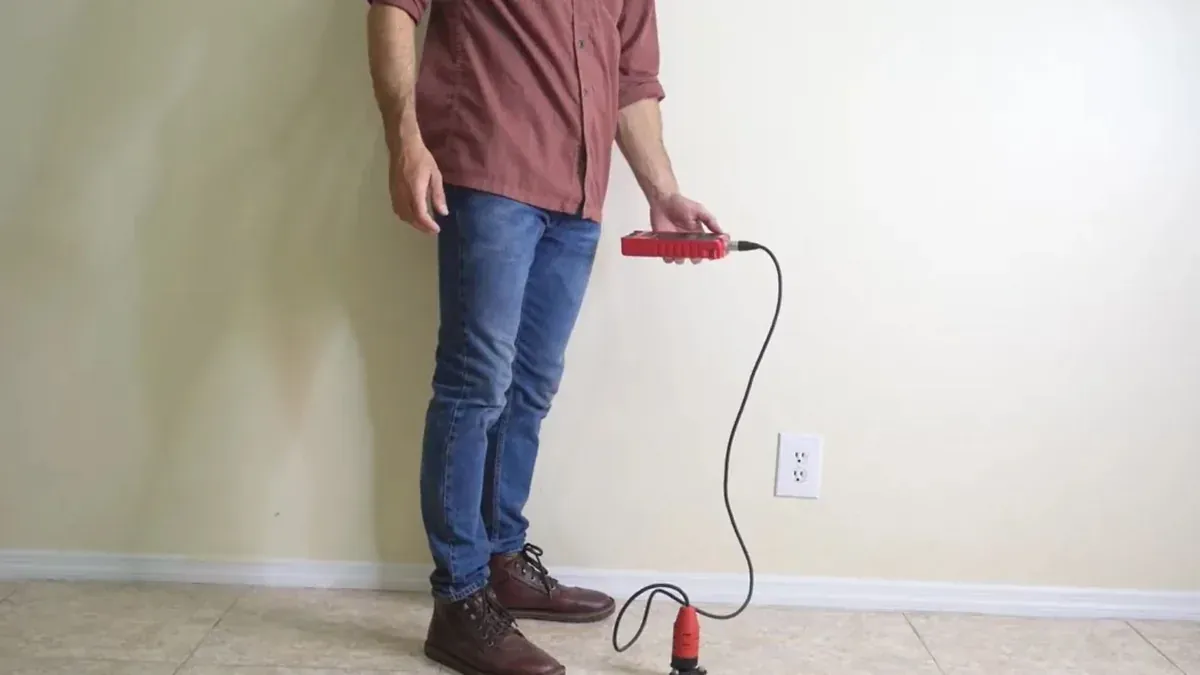
Start by comparing bills
Pull your last year of bills, if you have them, and compare the same months. Summer bills are higher because of irrigation. A rise in winter, when you use less water outdoors, is a stronger clue. Note the billing period too, because some bills cover longer cycles.
Then read your meter. If it moves with every tap off, the leak is real. If it does not, the extra use may be an appliance, a guest, or a billing change.
The usual suspects, ranked
| Cause | Typical sign | How to confirm |
|---|---|---|
| Toilet flapper | Faint trickle sound, bowl refills on its own | Dye test in the tank |
| Irrigation valve stuck open | Wet strip or low pressure in sprinklers | Turn off the irrigation supply and recheck the meter |
| Dripping faucet or hose bib | Drip you can see or hear | Look and listen |
| Underground service line | Wet ground between meter and house | Meter test, then locate the line |
| Water heater relief valve | Water at the discharge pipe | Check the drain pipe for flow |
| Slab or wall supply leak | Warm floor, damp wall | Acoustic and thermal locating |
Toilets and irrigation account for most of the leaks homeowners can fix themselves. Underground lines and slab leaks need a locator, and our leak detection page describes the process.
Do a one-hour meter test
Shut everything off
No taps, appliances, irrigation or ice makers.
Record the meter
Write down the number and take a photo.
Wait one hour
Do not use any water.
Read it again
Any change is a leak that needs tracing.
What to do if the meter moves
Close the shutoff valve at the house. If the meter stops, the leak is inside. If it keeps moving, the leak is between the meter and the house. The second case is a service line repair and is the owner's cost.
If you find the leak, call your provider and ask about a leak adjustment. Many providers have a process for billing after a documented leak, and they will want proof of repair. Keep the plumber's invoice.
Why leaks are hard to see
Water goes to the lowest point
It runs along pipes and joists before it stains anything.
Slabs hide leaks
Water can soak into soil under the slab for weeks.
Irrigation leaks stay underground
Only a wet patch or a high bill shows them.
Small leaks add up
A steady drip can waste thousands of gallons across a billing cycle.
Prevent the next surprise
- Check your meter once a month.
- Replace toilet flappers every few years.
- Walk the irrigation system each season.
- Know where your main shutoff is.
- Replace old galvanized pipe before it fails. See our repiping page.
Reading your bill like a plumber
Most bills list usage in units, and a unit is a fixed volume your provider defines on the bill. Compare units, not dollars, since rates and fees change. A rise in units with no change in household habits is the number that tells you to hunt for a leak.
Look at the daily average if your bill shows one. A leak runs around the clock, so it raises the daily average even in a month when the household was away. If the daily average is high in a week when no one was home, the water was going somewhere.
Why meter tests are the standard first step
Water providers and plumbing guidelines alike use the same basic idea: if the meter moves while every fixture is off, water is escaping. That is why the one-hour test above comes before any digging. It costs nothing, it needs no tools, and it tells you whether to keep looking in the house or move outside.
If the leak turns out to be a toilet, replacing the flapper under the manufacturer's guidelines is the usual fix. If it is a buried line, the repair must meet the California Plumbing Code, which is based on the Uniform Plumbing Code (UPC).
Pleasant Hill: who reads your meter
Contra Costa Water District serves part of Pleasant Hill, and other providers serve other addresses, so the first step is to find your provider on your bill. Ask the provider about leak adjustment policies, since they differ and we cannot speak for any agency.
Many Pleasant Hill homes date from the postwar decades, and galvanized steel from that era corrodes inside and can pinhole. If your leak is in old pipe, it is rarely the last one, so ask for a pressure test.
For neighbors, see the Walnut Creek page and the Clayton page.
Local questions
A toilet flapper or a stuck irrigation valve. Check both before looking for a buried leak.
Turn off all water use and watch the leak indicator or the reading for an hour.
Policies vary by provider. Ask yours, and keep the repair invoice.
Generally the owner. Confirm with your water provider.
Yes, at first. A locator can find it.
Still have a question about your situation? Call (855) 575-2890 any hour and describe what you are seeing.