Where PVC belongs and where it does not
| Use | PVC suitable | Notes |
|---|---|---|
| Drain, waste and vent lines | Often yes | Check what your local code and inspector accept |
| Irrigation | Yes | Pressure rating and fittings must match |
| Hot water supply lines | No | Standard PVC softens with heat, use pipe rated for hot water |
| Gas lines | No | Never use PVC for gas |
| Water heater connections | No | Use approved flexible connectors and metal or rated pipe |
The most important line in that table is the hot water row. Ordinary PVC is not made for hot supply, and a joint that holds in the garage in March can fail under a water heater load in July. If the pipe carries hot water or gas, this guide is not the right tool and you should call us.
What you need
- A ratcheting PVC cutter or fine-tooth saw.
- A deburring tool or sandpaper.
- PVC primer and solvent cement rated for the pipe size and use.
- A tape measure and a marker.
- Gloves and eye protection, and good ventilation, because the fumes are strong.
Making a solvent-welded joint
Cut square
Mark the pipe and cut straight. A crooked cut leaves a gap in the joint.
Deburr and dry fit
Remove shavings inside and out. Dry fit the pieces and mark the alignment.
Prime
Apply primer to the pipe end and inside the fitting. It softens the plastic.
Cement and twist
Apply cement, push the pipe in with a quarter turn and hold it for several seconds.
Do not run water through a new joint until the cement has cured per the can's instructions. A joint that is rushed leaks, and the leak often shows up days later behind a cabinet.
Slope, traps and vents matter more than the glue
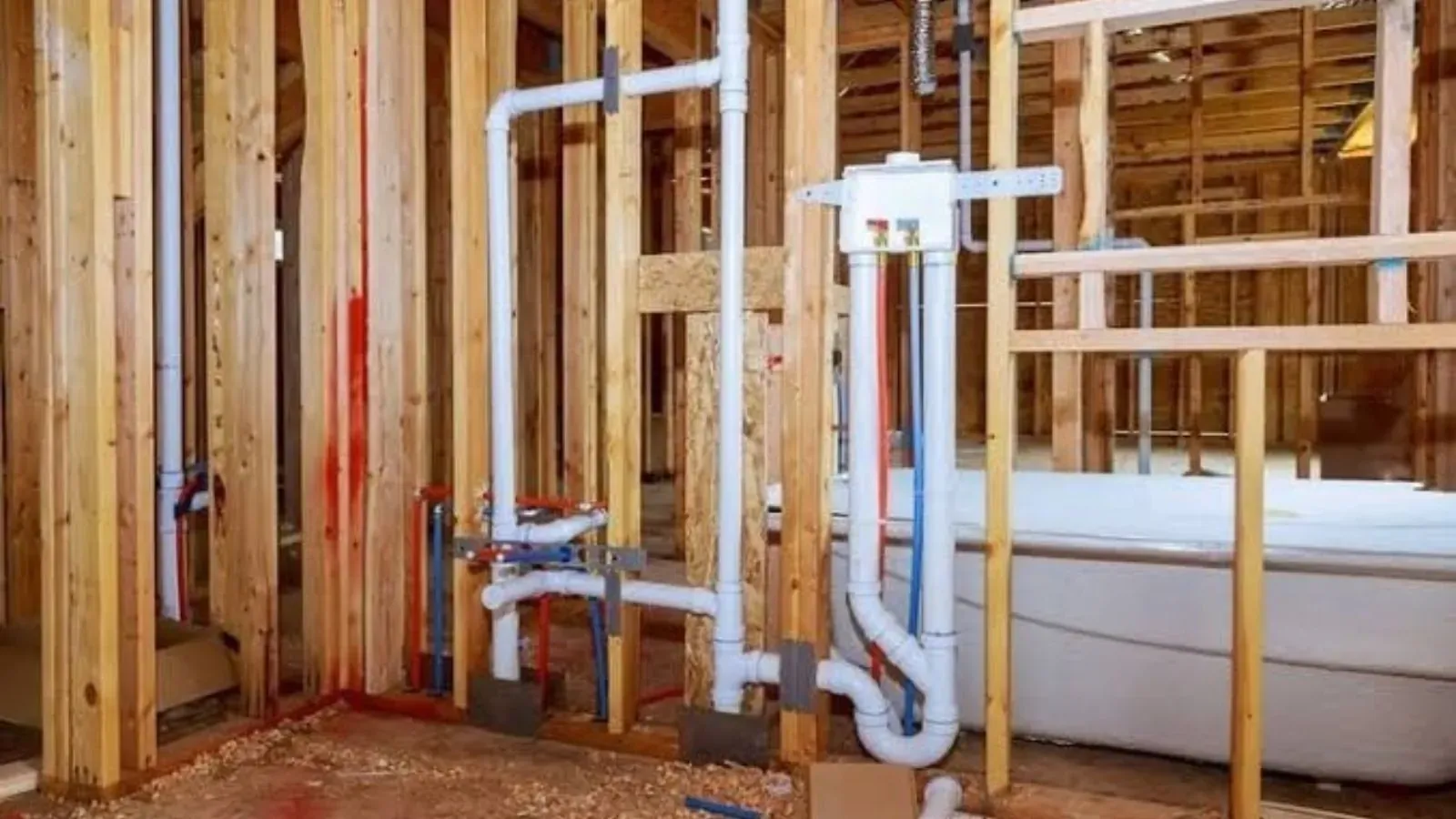
A drain works by gravity, so slope is part of the system. A line that is too flat leaves solids behind. A line that is too steep can let water run ahead of waste. Every fixture also needs a trap and a vent, and a missing vent causes gurgling and slow drains no matter how good your joints are.
This is the point where a weekend project turns into a plumbing design problem. If you are adding a sink or relocating a drain, our plumbing installation page explains what we plan before any pipe is cut.
Common mistakes we see
Skipping primer
Cement alone may hold briefly and then weep. Primer is part of the joint.
Mixing materials
Joining PVC to cast iron or copper needs the right transition fitting.
Overtightening threaded fittings
Plastic threads crack. Hand tight plus a small turn is enough.
No cleanout
A drain without access turns the next clog into a demolition job.
When to stop and call
Stop if the pipe is in a wall, under a slab, tied to the sewer lateral, or connected to a water heater. Call if you see sewage, if the line backs up when you run another fixture, or if you smell gas. A clogged line can be cleared with drain cleaning, and a leaking joint behind a wall is a job for leak detection.
Choosing fittings and testing the result
Drain fittings come in sweeping and sharp versions. A sweeping elbow guides waste around a turn, while a sharp one can catch solids. Use a sweeping fitting where a horizontal run turns, and keep a sharp one for places where a vertical pipe meets a horizontal one with a long radius.
After the joints have cured, test the line. Fill the sink, let it drain fully, and watch every joint with a dry paper towel. Then run the water for several minutes and check again. A test that takes ten minutes now avoids a stained cabinet later.
Write down what you installed, the pipe size and the date. If you ever sell the house or call a plumber, that note saves a lot of guessing about what is behind the wall.
Pleasant Hill: permits and sewer connections
Plumbing work in California follows the California Plumbing Code, and permit requirements depend on the city, so ask the Pleasant Hill building division whether your project needs a permit. Do not assume a small change is exempt.
If your drain connects to the private sewer lateral, note that Central San says the owner is responsible for the whole lateral and that exterior sewer work in its service area needs a district permit before any digging. Interior fixtures and a lateral are not the same job.
If you are on the Concord side, our Concord page covers local agency differences, and the Walnut Creek page does the same south of town.
Local questions
Rules depend on the scope. Ask the Pleasant Hill building division before you start, particularly if you are adding a fixture or moving a drain.
Standard PVC is not suited to hot supply lines. Use pipe rated for hot water, or call us.
Follow the cement manufacturer's cure time. Rushing is a common cause of weeping joints.
Often a missing or blocked vent, or a trap that is siphoning. It is a design issue, not a glue issue.
Yes, with a proper transition fitting. A mismatch leaks over time.
Still have a question about your situation? Call (855) 575-2890 any hour and describe what you are seeing.